TreasuryClear
Which financing fits?

Equipment: lease or loan?

The lease has the smaller monthly payment. That's the wrong number to compare. Put in both offers and see the total cost to own the equipment each way, buyout included. Then decide.

Buy with a loan
Lease

Enter $0 if you'll hand the equipment back instead of keeping it.

Total cost to own

What this counts, and what it doesn't

The loan total is your down payment plus every payment. The lease total is every payment plus the buyout, if you plan to keep the equipment. A loan leaves you owning an asset; a lease you walk away from leaves you with nothing, which is the right choice for gear that's obsolete in three years and the wrong one for something you'll run for a decade.

This is a cash-cost comparison, not a tax one. Section 179 expensing, bonus depreciation on a purchase, and the deductibility of lease payments all change the after-tax answer and all depend on your situation. Run the total here, then take it to your CPA for the tax layer. It is an estimate, not advice.
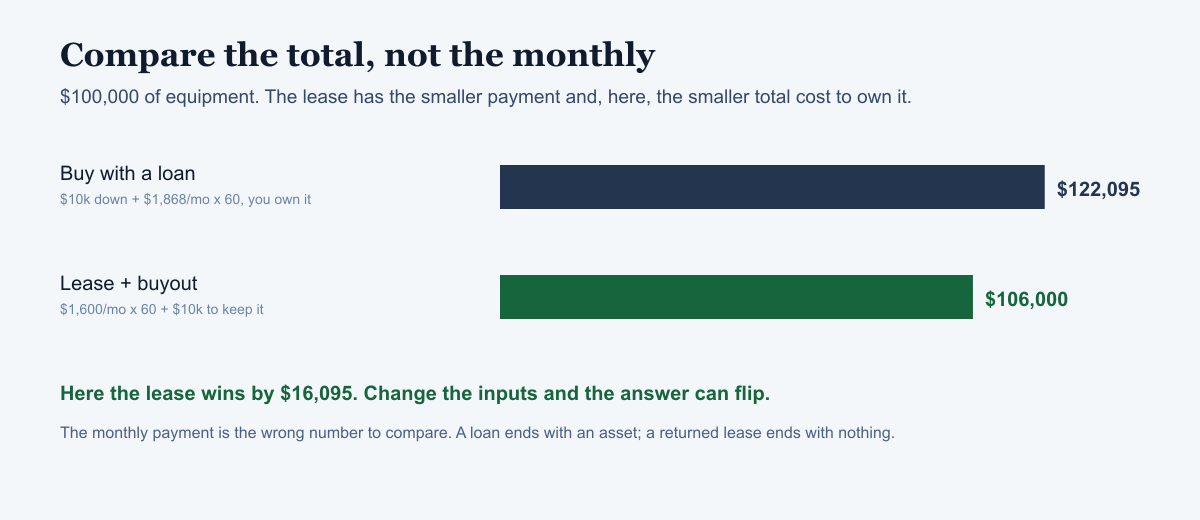
Bar chart comparing a loan total against a lease-plus-buyout total on the same equipment.
The cash comparison this tool runs: total paid on the loan versus total paid to lease and then buy. The gap is usually smaller than the monthly payments suggest. Editorial illustration, TreasuryClear.

The question isn't only cost

A loan almost always wins on total dollars, because you own an asset at the end. Leasing wins when you'd rather not own the thing: when it goes obsolete fast, or when protecting cash matters more than the last dollar.
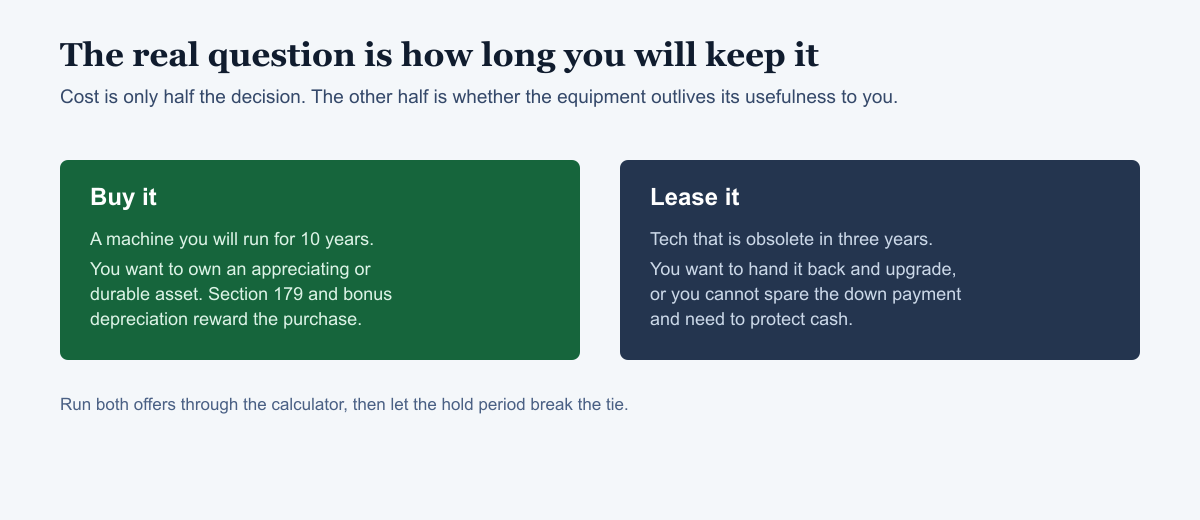
Two panels: buy for equipment you'll run ten years and want to own, lease for tech obsolete in three years or when you need to protect cash.
A rule of thumb the number alone won't give you: buy what you'll run for a decade, lease what's obsolete in three. Match the financing to the equipment's life. Editorial illustration, TreasuryClear.
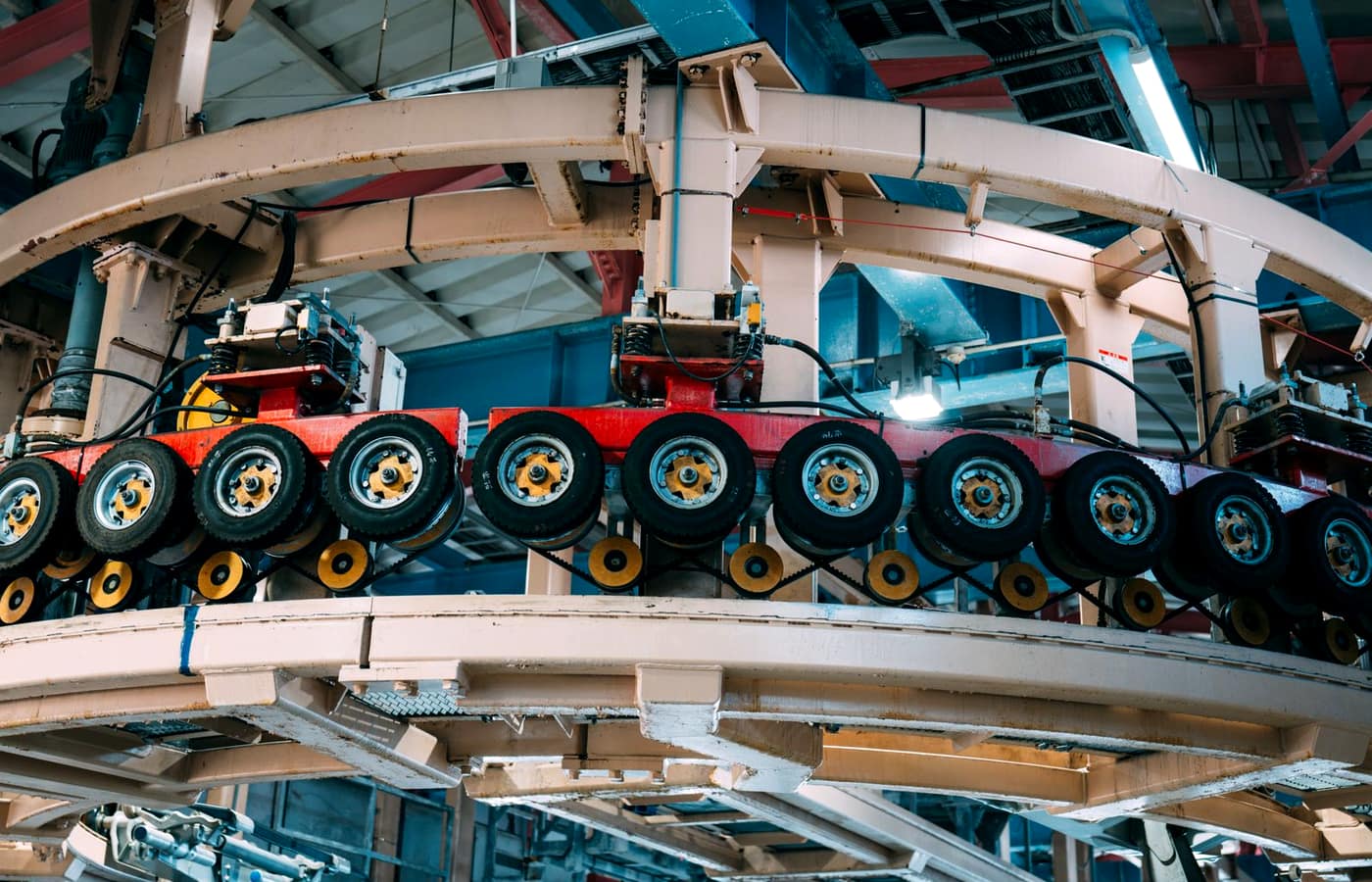
An industrial conveyor and roller system running through a plant.
Long-life production machinery is a classic buy: you'll run it for years and want to own the asset, so the loan's lower total cost usually wins. Photo: Michael Li via Pexels. Pexels License.

Where each one fits

Match the structure to the asset. Heavy equipment you'll keep leans toward a loan; fast-moving or quickly-dated gear, or a cash-tight stretch, leans toward a lease. Run your own numbers above before deciding.
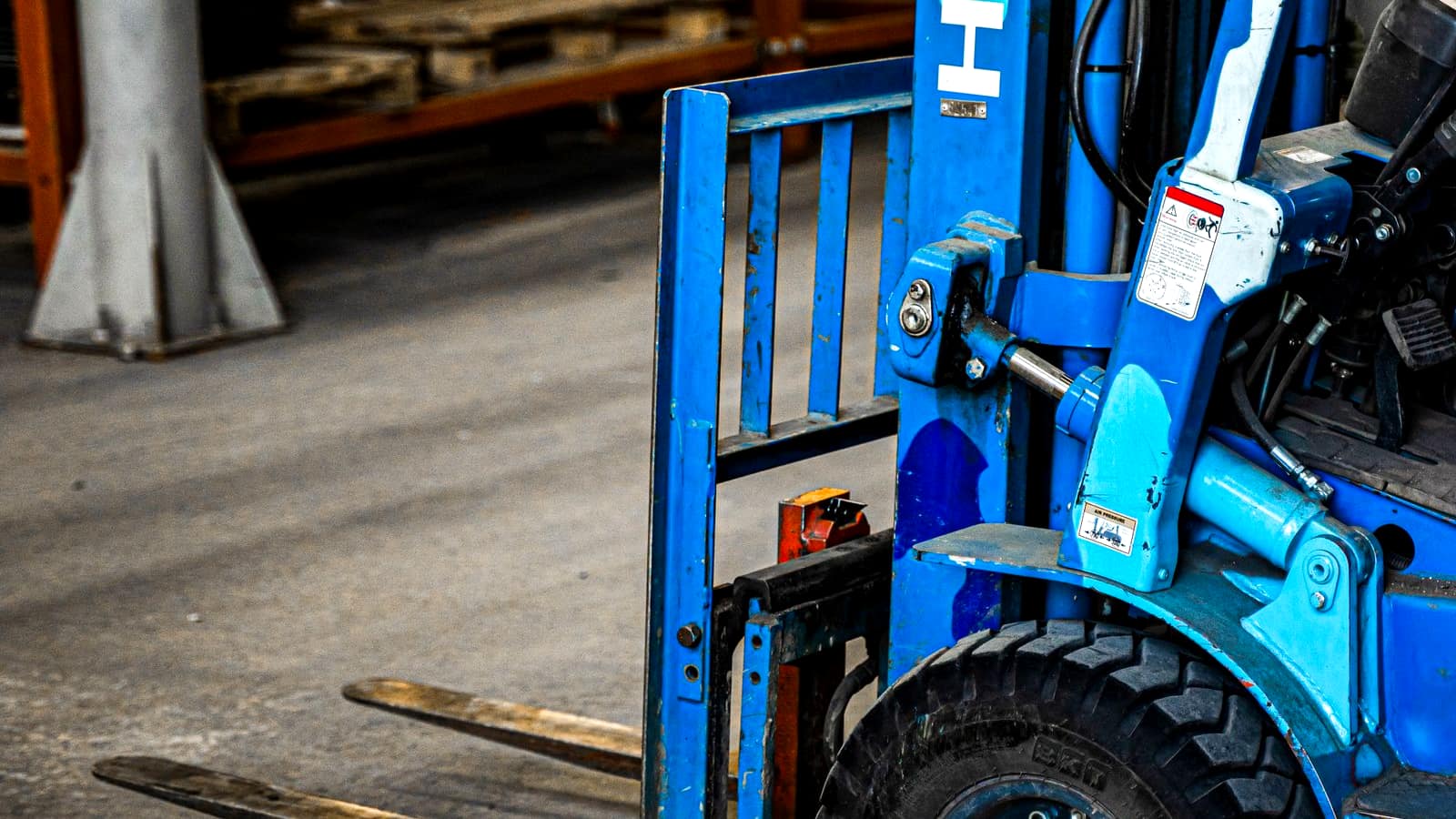
A close-up of a blue forklift's mast and forks on a warehouse floor.
Workhorse equipment that holds its value and stays useful for years is what a loan is built for. You carry the residual, but you also keep it. Photo: Alex Urezkov via Pexels. Pexels License.
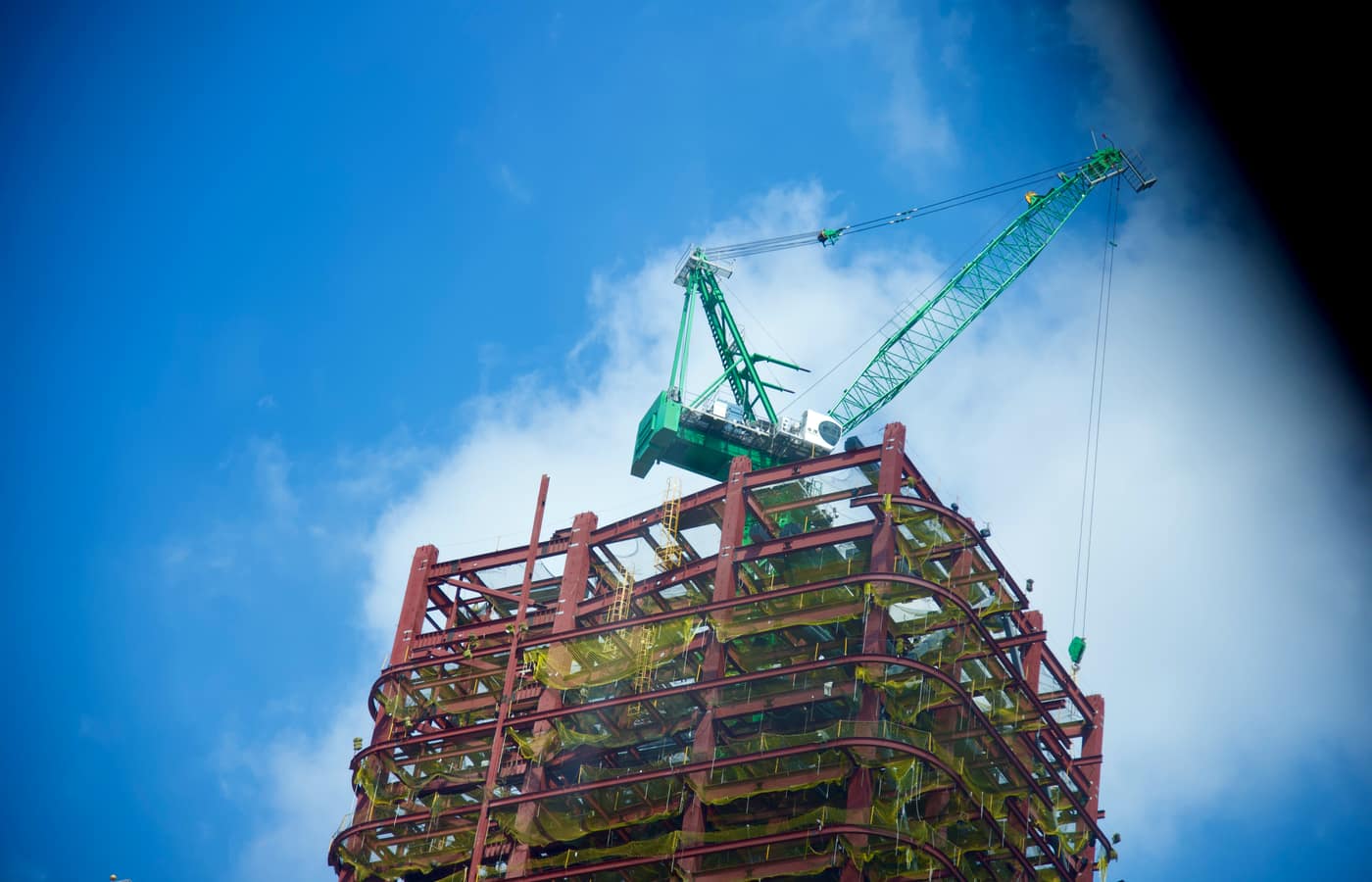
A steel-frame building under construction with a tower crane against a blue sky.
When a job needs a machine for a season, not a decade, leasing keeps the cash free for everything else the project demands. That flexibility is what you're paying the premium for. Photo: SSJF01 via Wikimedia Commons. CC0.