TreasuryClear
Which financing fits?

R&D tax credit, roughly what it's worth

The federal credit under the Alternative Simplified Credit method is 14% of your qualified research spend above a base, or 6% if you've never claimed before. Put your numbers in for a ballpark. It's an estimate to tell you whether a study is worth a call, not a figure to file.

Qualified wages, supplies, and 65% of contract research. A rough total is fine here.

Have you had qualified research spend in the last 3 years?

Estimated federal credit

What this estimate leaves out

This is the gross federal ASC credit only. Three things change the number you actually keep, and all of them depend on your situation, so they belong with your CPA, not in a browser:

  • The Section 280C election, which trades a smaller credit for keeping your deduction. Often worth it.
  • The payroll-tax offset, which lets a qualified small business use up to $500,000 of the credit against payroll taxes instead of income tax, useful if you're pre-profit.
  • State credits, which many states stack on top of the federal one.

Rates: 26 U.S.C. 41(c)(5) (ASC: 14% over base, 6% first-time), verified July 2026. Estimate only, not tax advice.
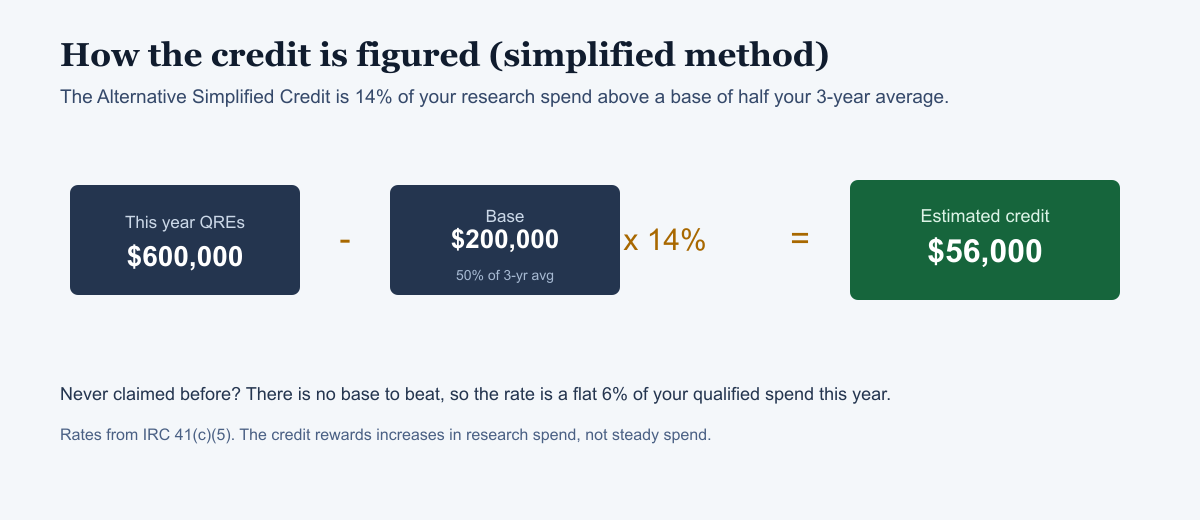
Diagram: this year's qualified research expenses minus a base amount, times 14 percent, equals the credit.
The arithmetic this tool runs: your qualified spend over a base amount, times the ASC rate. The estimate above is only as good as the expenses you feed it. Editorial illustration, TreasuryClear.

What counts as a qualified expense

The credit isn't only for lab coats. Wages for the people doing and supervising the work, supplies consumed in it, and 65% of contract research all count, as long as the work meets the four-part test. Getting these inputs right is what moves the number.
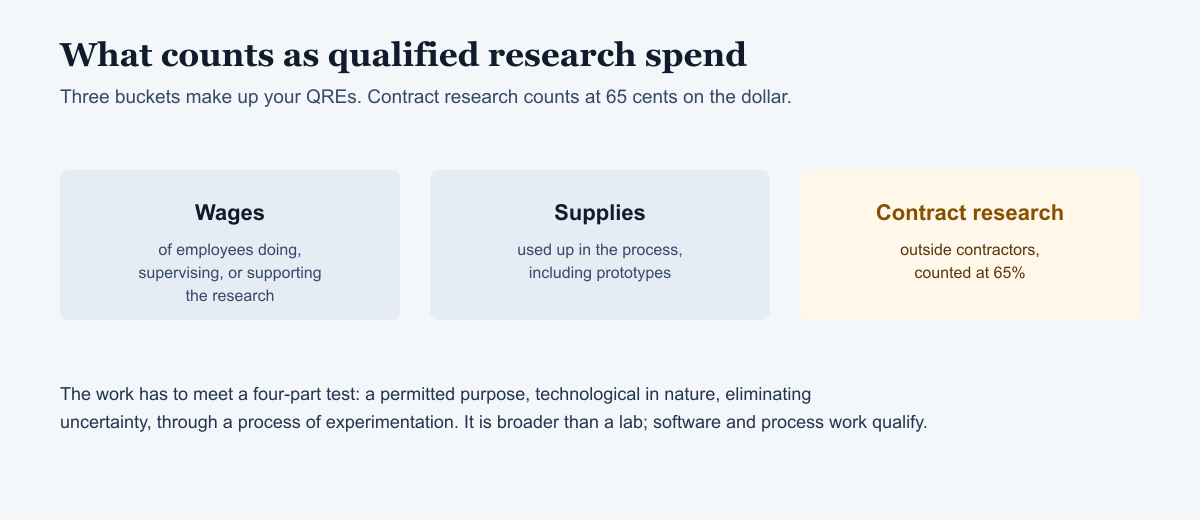

Three boxes showing the qualified research expense categories: wages, supplies, and contract research counted at 65 percent.
The three buckets of qualified spend. Most companies undercount wages, because the test covers the engineers' time spent on qualifying work, not just a formal R&D department. Editorial illustration, TreasuryClear.
Hands wiring components onto an electronics breadboard with colored jumper wires.
The work qualifies when it aims to resolve technical uncertainty through experimentation. A shop iterating on a design, not just a lab, is exactly who the credit is for. Photo: Jeswin Thomas via Pexels. Pexels License.

Who can actually use it

A profitable company takes the credit against income tax. A pre-profit startup can apply up to $500,000 against payroll taxes instead, which is why the tool is useful even before you owe income tax.
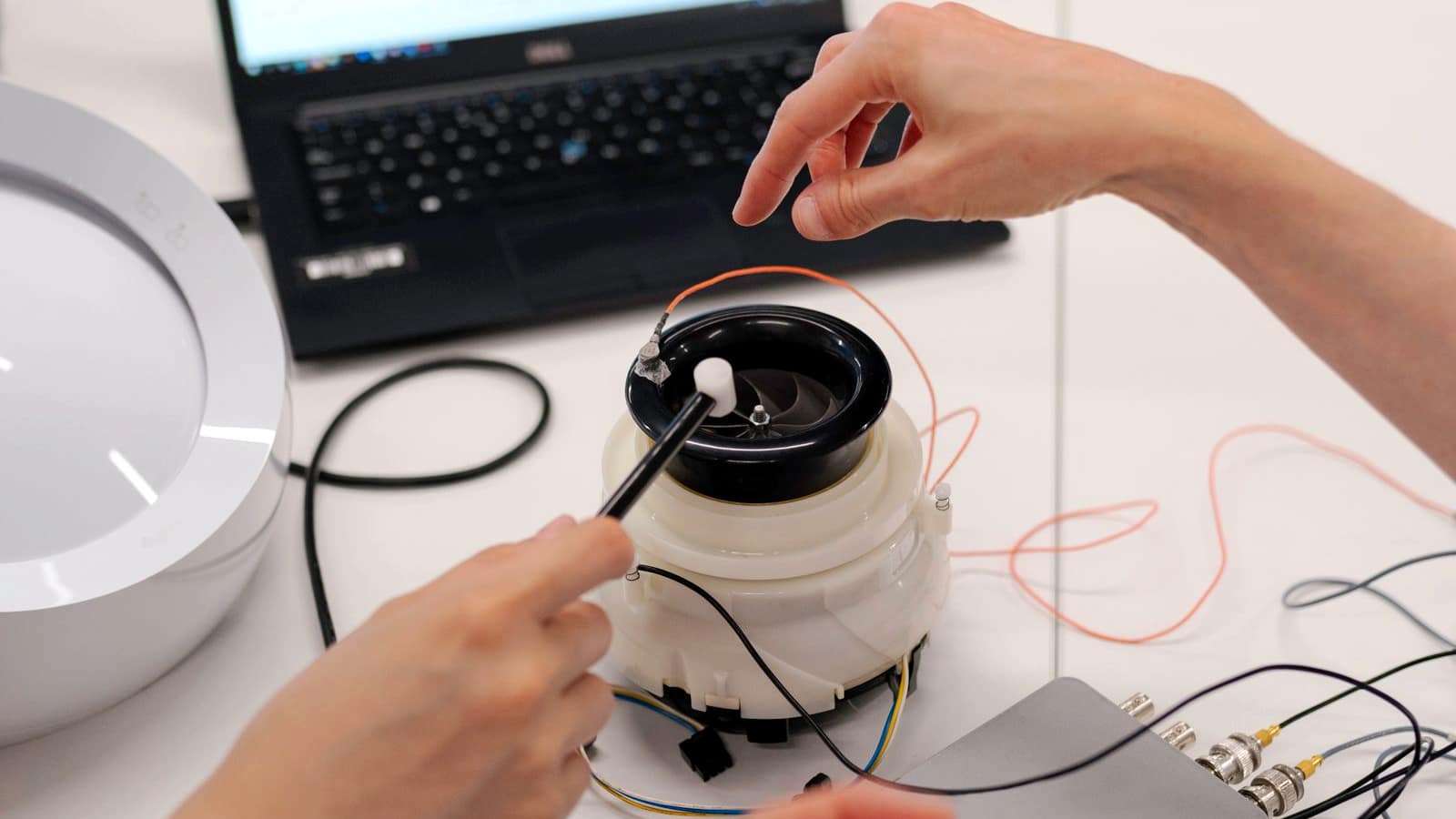
Two people working on an electronic prototype device with wires and a laptop on a workbench.
Software teams, manufacturers, and product shops all commonly qualify. The estimate here is a starting point for a conversation with a credit specialist, not a filing. Photo: ThisIsEngineering via Pexels. Pexels License.
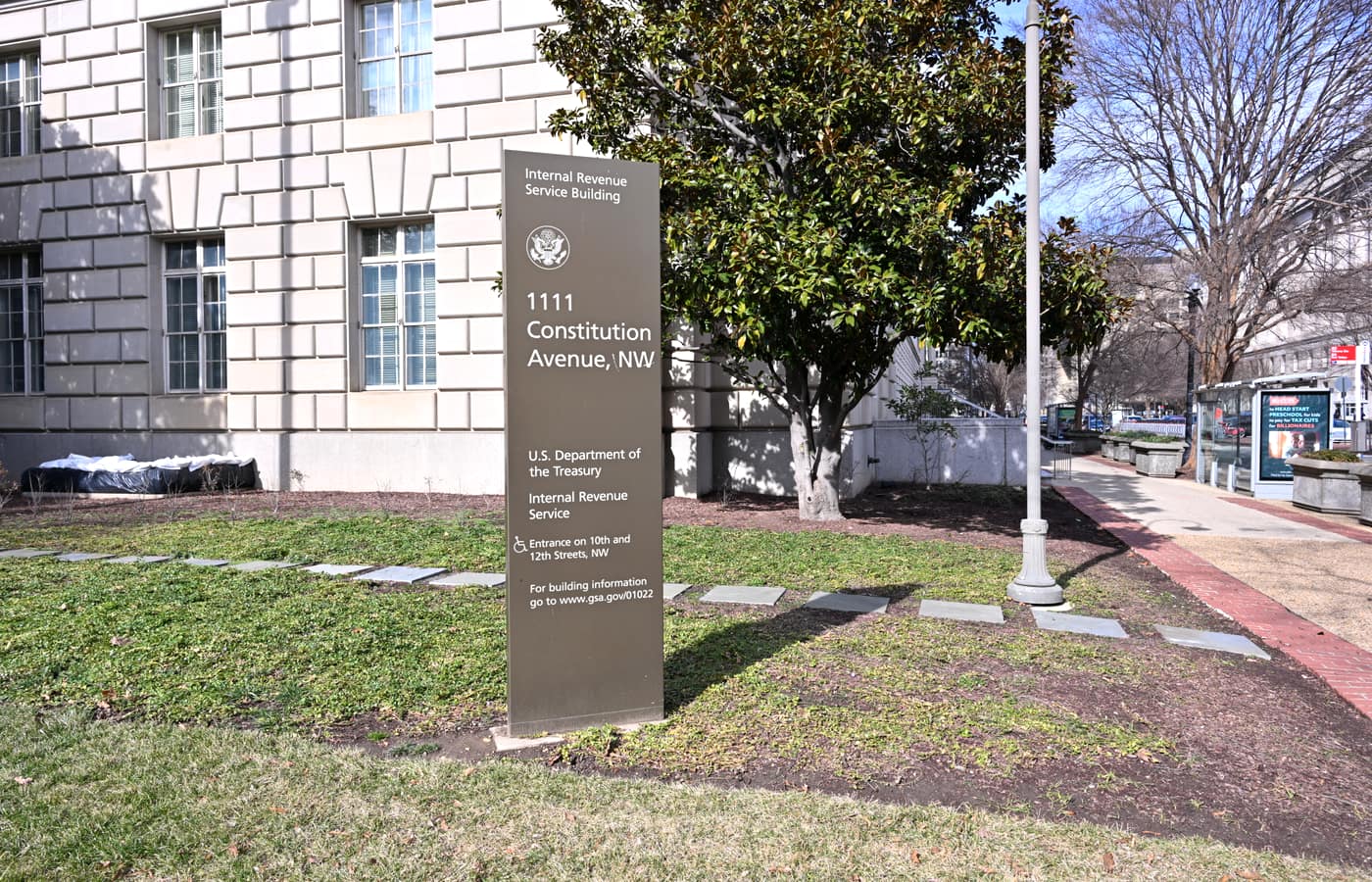
Exterior sign for the Internal Revenue Service building at 1111 Constitution Avenue in Washington.
The credit is a matter of tax law with a real documentation burden. The number this tool gives you is an estimate; the claim itself needs records that satisfy the IRS. Photo: G. Edward Johnson via Wikimedia Commons. CC BY 4.0.