TreasuryClear
Which financing fits?

SBA 7(a) loan payment calculator

The rate box starts at the legal maximum for your loan size, prime plus the SBA's spread cap. That's the ceiling, not a quote: a good lender comes in under it. Change it to whatever you've actually been offered and see the payment. Prime is 6.75% as of July 15, 2026.

Starts at the legal max for the amount above. Enter your real quote to compare.

Your estimate

The rate ceiling, by loan size

SBA caps how far over the base rate a 7(a) lender may go, and the cap is wider on smaller loans. At today's 6.75% prime, the maximum variable rate is:

Loan sizeMax spreadMax rate today
$50,000 or lessprime + 6.5%13.25%
$50,001 to $250,000prime + 6.0%12.75%
$250,001 to $350,000prime + 4.5%11.25%
Over $350,000prime + 3.0%9.75%

Spreads: SBA 7(a) terms, verified July 2026. Prime: Federal Reserve H.15, July 15, 2026. Estimate only; your quote depends on your lender, credit, and collateral.
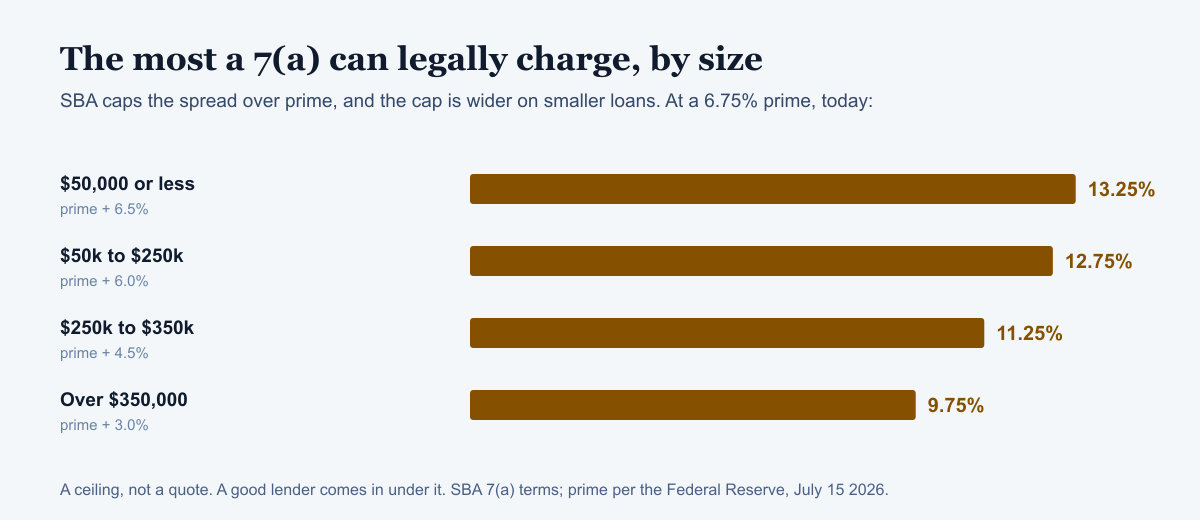
Bar chart of the SBA 7(a) maximum rate by loan size: smaller loans carry a wider spread over prime, larger loans a narrower one.
The table above, drawn out: the smaller the loan, the wider the legal spread over prime. The calculator fills the rate box with the ceiling for whatever amount you enter. Editorial illustration, TreasuryClear.

Where the rate actually comes from

A 7(a) rate isn't a lender's whim. It's a base rate, almost always the prime rate, plus a spread the lender chooses up to the SBA's cap. That structure is why the ceiling is knowable in advance, and why a quote well under it is the sign of a competitive lender rather than a favor.
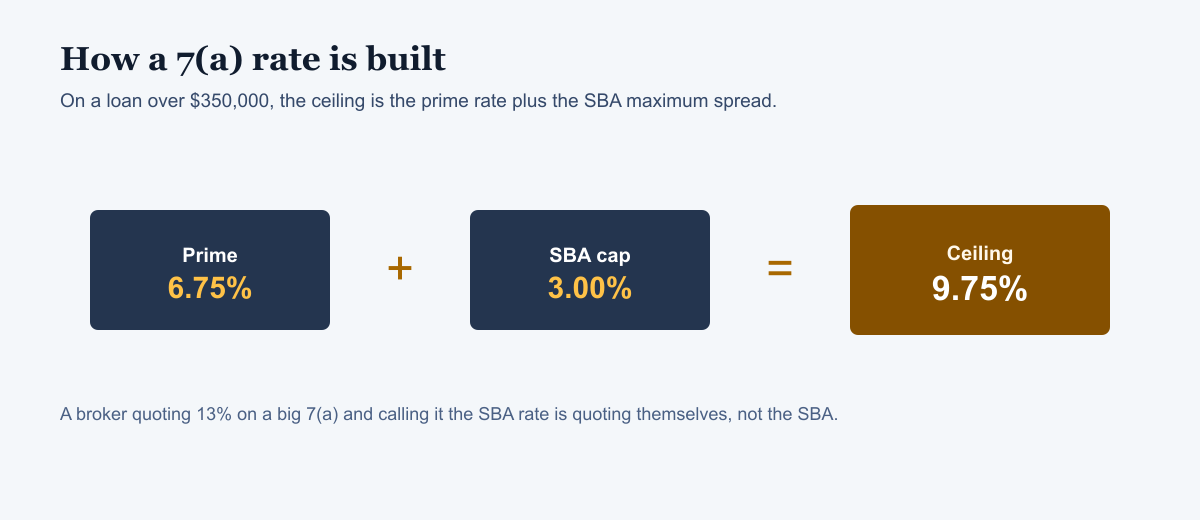
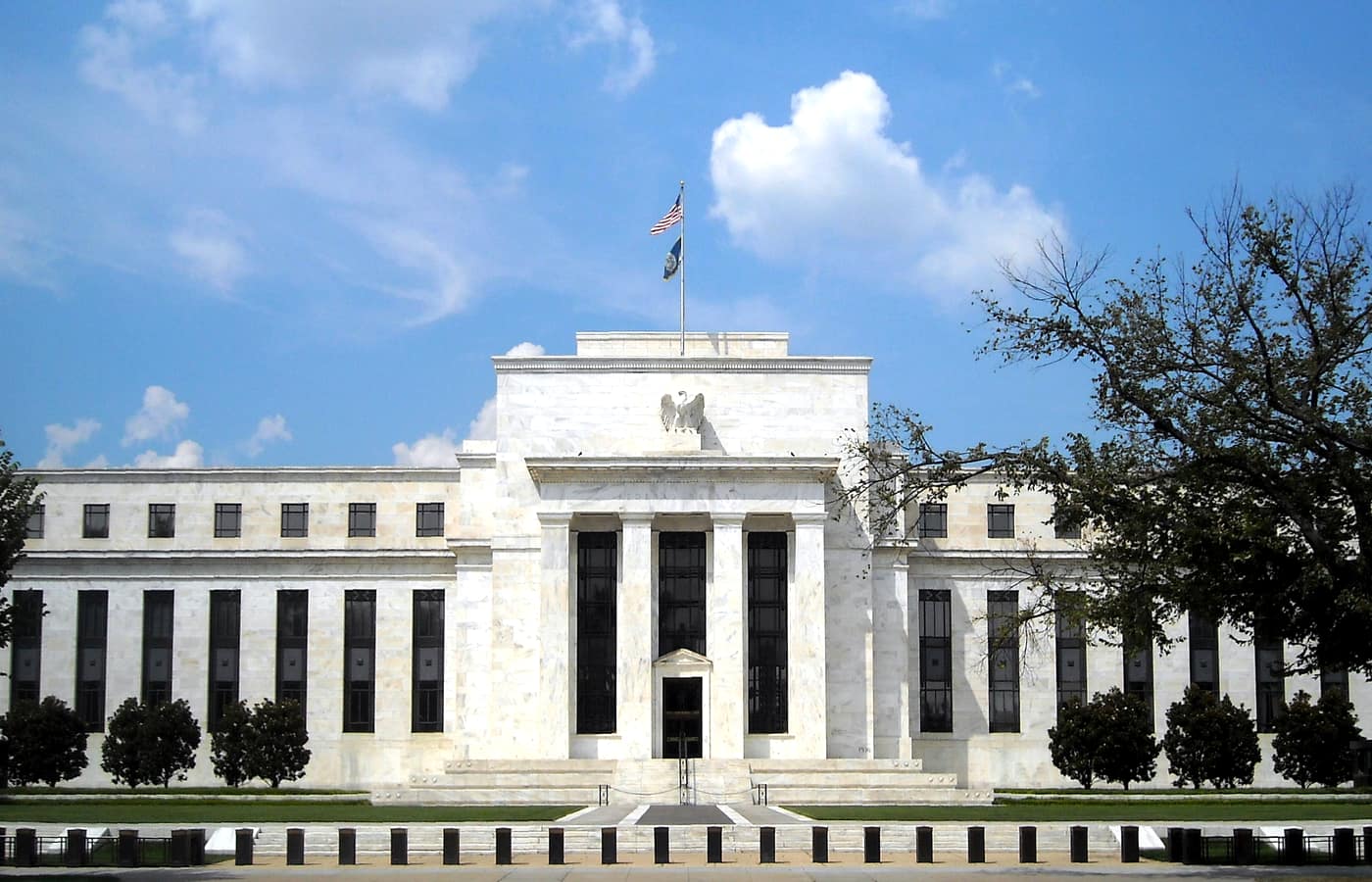
Diagram building the SBA 7(a) rate from a prime base plus the lender's spread up to the SBA cap.
Prime sets the floor the whole market moves on; the spread is the only part a lender controls, and the SBA caps how high it can go. Editorial illustration, TreasuryClear.
The Marriner S. Eccles Federal Reserve building in Washington.
Because the rate floats on prime, it moves when the Federal Reserve moves. The number this tool shows is a snapshot at today's prime, not a rate locked for the life of the loan. Photo: AgnosticPreachersKid via Wikimedia Commons. CC BY-SA 3.0.

What a 7(a) actually funds

The 7(a) is the flexible workhorse: working capital, an acquisition, a refinance, equipment, or mixed uses, up to $5 million. That breadth is the reason to run this payment against a real business plan rather than a round number.


A red and white OPEN sign hanging on the glass door of a shop.
For a Main Street business, a 7(a) is often the cheapest capital it can qualify for. The payment above is what that access costs each month. Photo: Joaquin Carfagna via Pexels. Pexels License.
A shop owner in an apron putting up a sign in the doorway of a small food store.
The personal guarantee behind most 7(a) loans is why the monthly number matters: it's an obligation the owner carries, so knowing it before signing is the point of this tool. Photo: Kampus Production via Pexels. Pexels License.