What's the real rate behind that quote?
A factoring fee of "2.5%" and a cash advance "factor rate" of 1.4 are both costs written so they don't look like a rate. Type the quote in and get the annual rate it works out to, the way a bank loan would be quoted to you. It runs in your browser, and nothing is sent anywhere.
The real rate
How each number is worked out
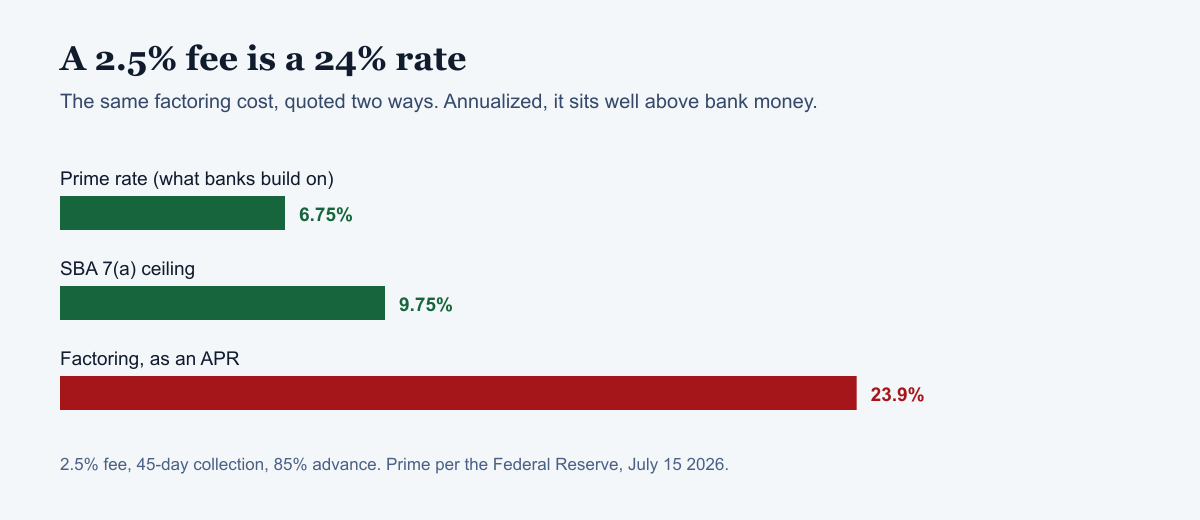
Factoring is a bullet cost: the fee is taken once and your money is outstanding for the whole collection period, so the annual rate is the fee against what you were advanced, scaled up to a year. Fee divided by advance, times 365 over the days outstanding. It does not compound, so this is the conservative read.
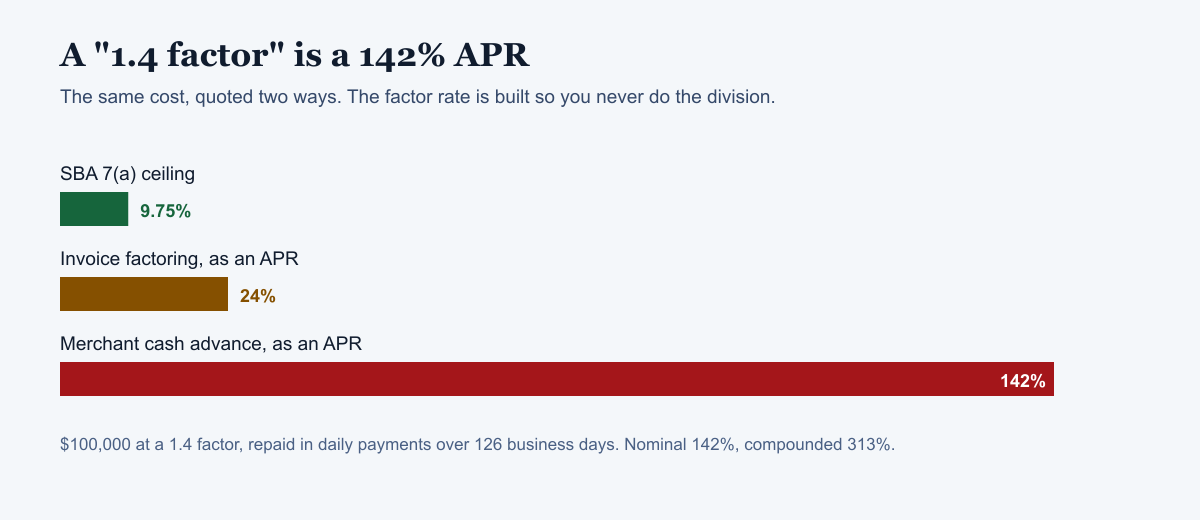
A merchant cash advance is different, and worse than the factor rate suggests, because you repay a fixed slice every business day from the first day. Your balance falls the whole time, so the real rate is the internal rate of return on that daily payment stream, annualized. That is why a "1.4" can be a triple-digit APR: you never had use of most of the money for most of the term.
This is arithmetic on the numbers you enter, not a quote, an offer, or advice. Your actual terms depend on your business. If a rate here looks high, that is the point: take it to the financing options that price in the teens before you sign anything in the triple digits.
A factor rate is not an interest rate
A 1.4 factor sounds like 40%. Repaid over a few months instead of a year, it's an annual rate two to four times that. The math is counterintuitive in exactly the direction that flatters the lender, which is why the number gets quoted as a factor in the first place.

Use the real rate to shop
The point isn't that every one of these products is bad. It's that you can't compare a factor rate to a bank rate until both are annual. Convert the quote, then hold it against the cheaper doors before you sign.