TreasuryClear
Which financing fits?

Which financing actually fits?

Six questions. You get a ranked shortlist with the real annualized cost of each option and the reason it surfaced, plus what we ruled out and why. Nothing is submitted anywhere, and it runs entirely in your browser.

What could you pledge as collateral?

Choose all that apply.

Are you profitable on an operating basis?

Your shortlist

What we ruled out, and why

How the ranking works

Structures are scored on fit for the stated purpose, whether you hold the collateral they lend against, whether you clear the time-in-business and revenue bars lenders actually apply, and whether they can fund inside your timeline. Anything that can't clear a hard bar is excluded outright rather than shown with a low score, because "technically available but you won't get it" wastes your time. Cheap money breaks ties.

The cost ranges are the honest spread a business with ordinary credit sees, not the teaser rate at the top of a lender's page. Reviewed July 2026. Your actual quote depends on your books, your industry, and your customers' credit, so treat these as the bracket to negotiate inside.
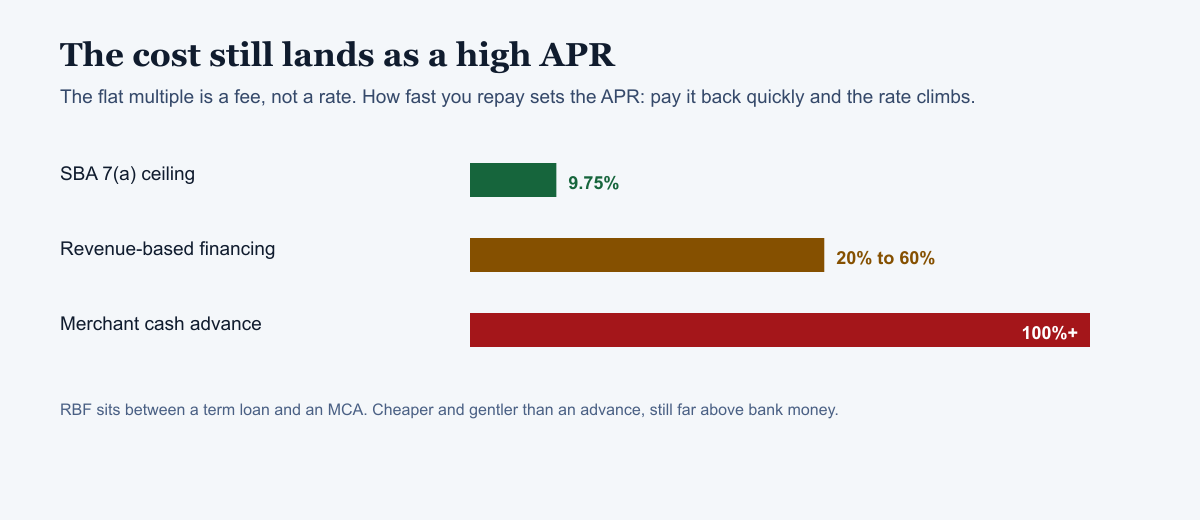
Bar chart comparing an SBA ceiling near 10 percent, revenue-based financing at 20 to 60 percent, and a merchant cash advance above 100 percent.
Why the router leads you toward the cheap end: the spread between structures is enormous. The same business can pay under 10% or over 100% depending only on which door it walks through. Editorial illustration, TreasuryClear. Prime: Federal Reserve H.15.

Match the structure to the job

The cheapest money you qualify for beats the fastest money every time the numbers are close. The router points you at a structure; the calculators then price it, so you walk into a lender with a target instead of a hope.

A person's hands resting on a printed document headed INVOICE on a dark wood desk.
If your cash is stuck in receivables, the answer is usually factoring or an asset-based line, not a term loan. What you're financing decides the structure as much as your credit does. Photo: MART PRODUCTION via Pexels. Pexels License.
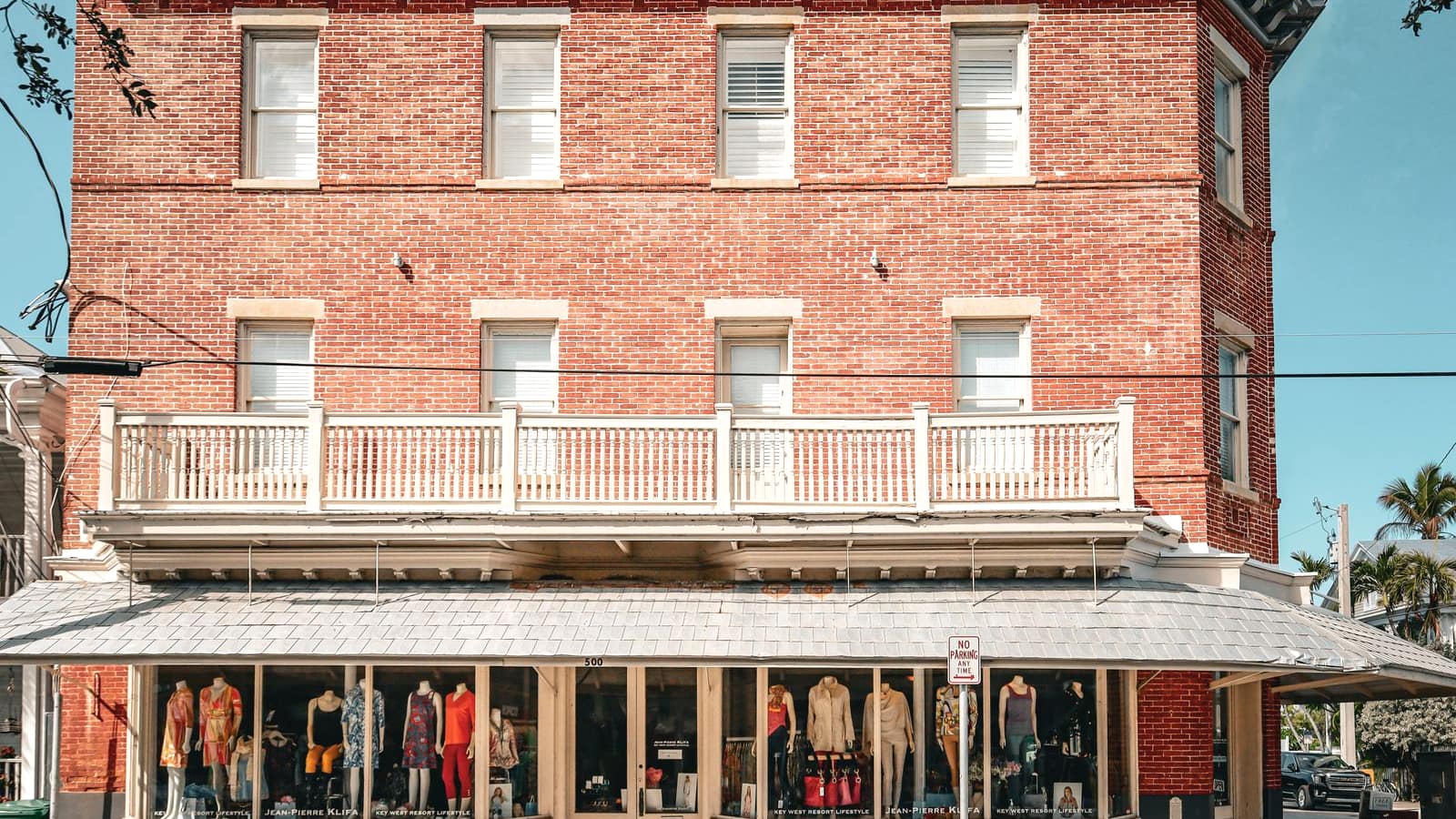
A three-story red brick commercial building with a ground-floor storefront.
Buying the building you operate from points at an SBA loan; funding a slow season points somewhere else entirely. The router sorts the purpose before the price. Photo: Arian Fernandez via Pexels. Pexels License.

Then price it before you sign

A recommendation is only half the job. Take the structure the router suggests into the matching calculator, convert every quote to an annual rate, and hold your lender to the cheaper number.
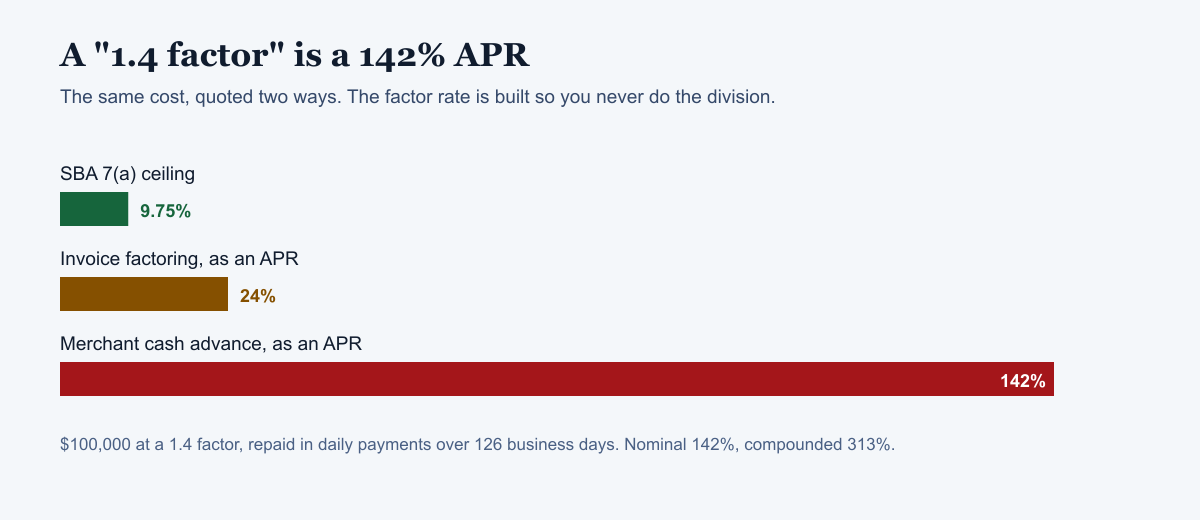

Bar chart comparing an SBA ceiling near 10 percent, invoice factoring, and a merchant cash advance shown as annual rates.
Whatever the router lands on, convert the offer to an annual rate before you sign. A factor rate and a bank rate aren't comparable until both are annual. Editorial illustration, TreasuryClear.
The west front of the United States Capitol under a clear sky.
The best-priced structures, the SBA programs, exist because Congress backs them. That's why the router reaches for them first: the rate is capped by law, not by a lender's goodwill. Photo: Architect of the Capitol via Wikimedia Commons. Public domain.