
Editorial standards
How we source and check every figure
Finance content rots. An SBA maximum rate published in 2023 is wrong today, a bonus depreciation percentage from last year is wrong this year, and neither page usually says when it was written. That's the failure mode this site is built against.
Photo: RDNE Stock project via Pexels
Here's the standard we hold ourselves to.
Every rate is dated on the page
Any page carrying a cost or rate shows a "Rates checked" date in the byline, and the figures in the body say the month they were verified. If you're reading a number here without a date next to it, that's a bug. Tell us.
Those pages get re-verified quarterly, because SBA caps move with the prime rate and the tax code moves with Congress.
What counts as a source
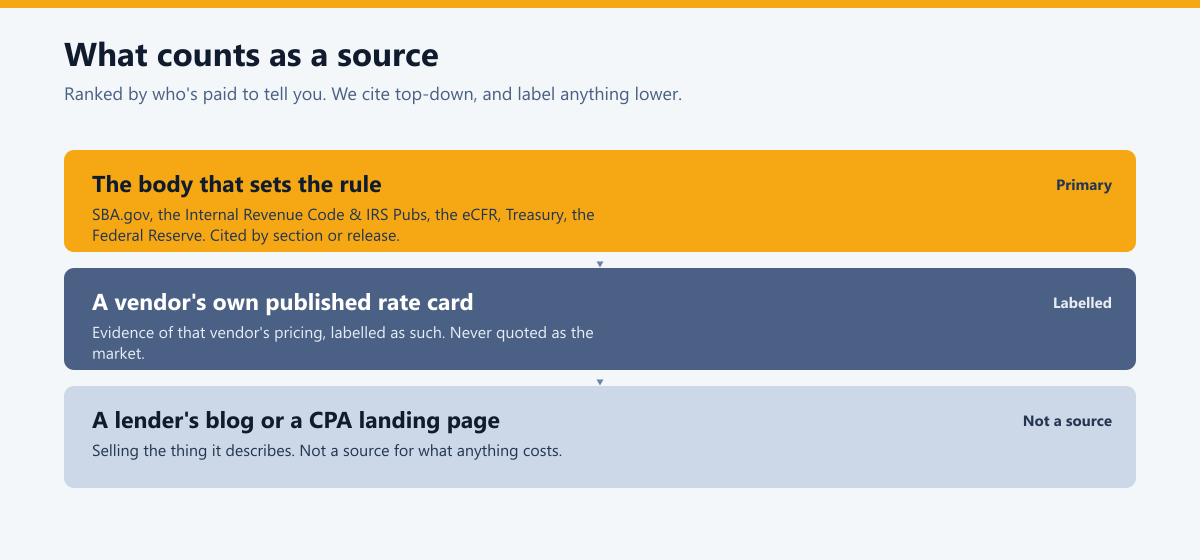
Rates and program rules come from the body that sets them: SBA.gov for 7(a) and 504 terms, the Internal Revenue Code and IRS publications for credits and deductions (cited by section or Pub number), the eCFR for regulation text, Treasury and the Federal Reserve for underlying rates.
A lender's blog is not a source for what lenders charge, and a CPA firm's landing page is not a source for what a study costs. Both are selling the thing being described. We'll cite a vendor's own published rate card as evidence of that vendor's pricing, labelled as such, and never as the market.
Where a number genuinely can't be verified, the page says so and gives the range with "confirm current terms with the provider" rather than inventing a figure that looks authoritative.

The build enforces the parts it can
Standards that live only in a document decay. So the checks run in CI and fail the build: a page marked as carrying rate guidance can't ship without a review date, at least two sources, and at least one primary source on a government domain. That's not a promise, it's a gate.
Money never buys a conclusion
We earn referral fees from some partners and name every one of them on the disclosure page. No partner sees a page before it publishes, none can request a change, and a fee has never moved a recommendation. We take nothing at all on merchant cash advances, because we tell you to avoid them, and that rail is blocked in the code rather than left to editorial willpower.
When we get it wrong
We correct it, and the page's modified date changes so you can see it moved. A wrong rate on a finance site can cost someone real money, so corrections outrank everything else in the inbox. Send them to hello@treasuryclear.com.
Who writes this
TreasuryClear publishes under the brand rather than personal bylines. That's a deliberate trade: you can't check our LinkedIn, so instead you can check every source we cite, on every page, with the date we checked it. Judge the sourcing, not the byline. If the sourcing doesn't hold up, nothing else here should persuade you.