SBA 504 loan rates and how the structure works
The SBA 504 funds owner-occupied real estate with a 50/40/10 split and a long fixed below-market rate. How it is built, what you put down, and 504 versus 7(a).
The SBA 504 loan funds owner-occupied commercial real estate and major equipment with a distinctive structure: a bank covers 50% of the project, an SBA-backed Certified Development Company covers 40% at a long, fixed, below-market rate, and you put down just 10%. That 10% is the headline. A conventional commercial mortgage usually wants 20% to 30% down, so the 504 lets a business buy its building while tying up far less cash.
The rate on the SBA portion is fixed for the whole term and priced below what a bank alone would charge, which is the other reason the 504 exists. It resets monthly at the debenture sale, so the exact number changes, but the structure and the advantages don’t. Here is how the whole thing is put together, and when it beats a 7(a).
The 50/40/10 structure
A 504 is really two loans and a down payment stacked on one project.
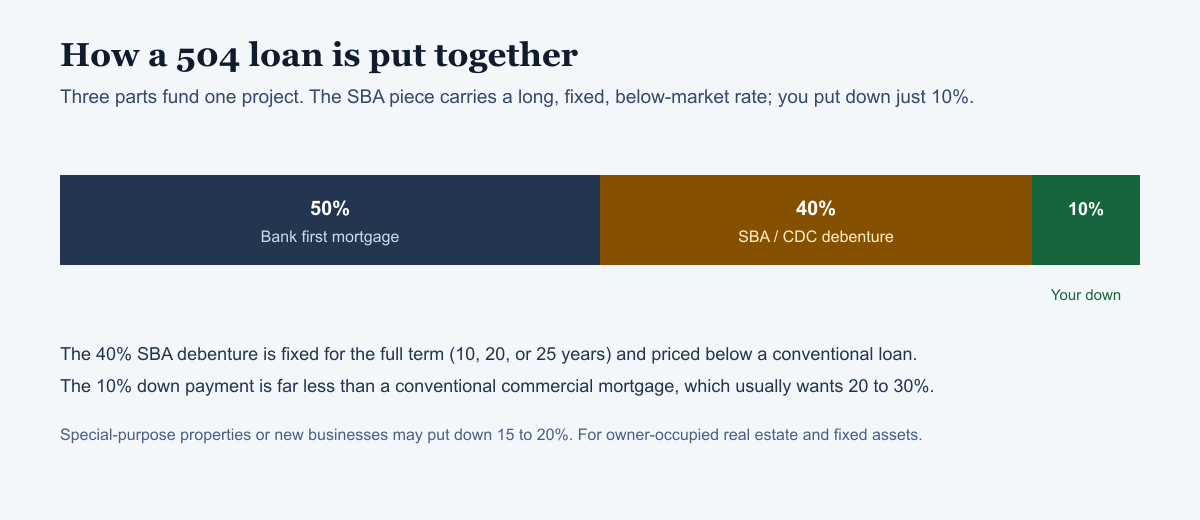
The bank’s 50% first mortgage is a conventional loan at a conventional rate. The Certified Development Company’s 40% is funded by an SBA debenture, and that’s where the value sits: it’s fixed for the full 10, 20, or 25-year term and priced below the market. Your 10% down is the smallest piece, though special-purpose buildings (think a restaurant or a car wash) or a brand-new business may push it to 15% or 20%. The tradeoff for all this is that the 504 is narrow: it’s for owner-occupied real estate and long-life fixed assets, not working capital.
Where the rate comes from
The 504’s fixed rate isn’t set by a bank’s whim. The SBA debenture is sold to investors each month, and its rate is pegged to Treasury yields, the 10-year for 20 and 25-year debentures, plus a spread. On top of the debenture rate sit ongoing fees to the SBA, the CDC, and a central servicing agent, which together add a fraction of a percent. The sum is your effective rate, fixed for the life of the loan.
Because it resets at each monthly debenture sale, there is no single “504 rate” to quote that stays true. The honest move is to check the current month’s rate with a CDC, and to watch the 10-year Treasury the debenture is priced against, which is what moves it. What doesn’t change is that the rate is fixed once you close, which is the 504’s biggest edge over a variable loan in an uncertain rate environment.

504 or 7(a): match the loan to the job
The two flagship SBA loans get confused constantly, but they’re built for different jobs. The 504 is a real-estate and heavy-equipment loan: long, fixed, low down payment, narrow in what it can fund. The 7(a) is the flexible workhorse: working capital, acquisitions, refinancing, mixed uses, usually at a variable rate up to the SBA cap.
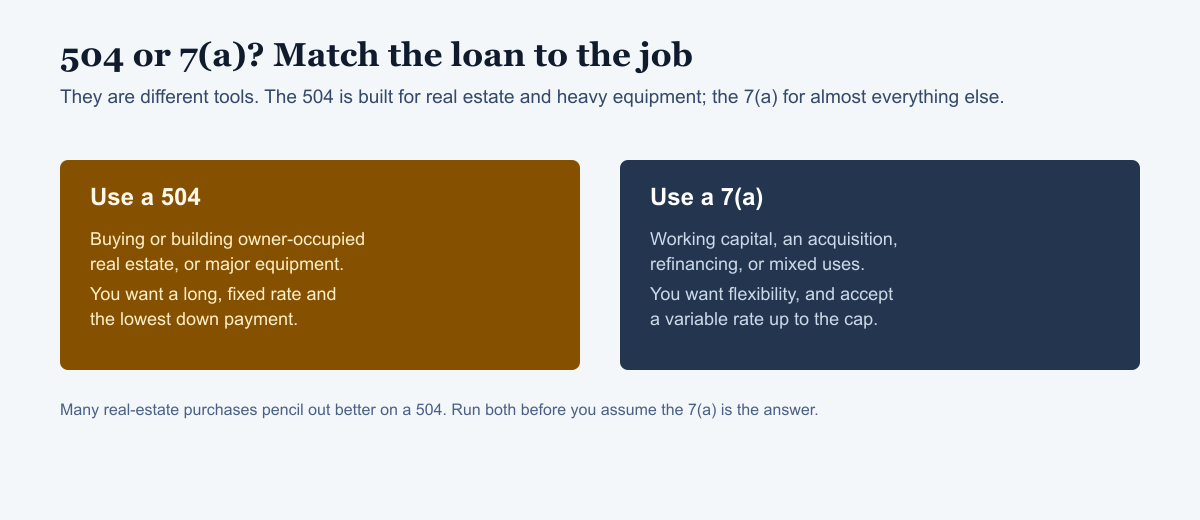
If you’re buying a building, run both. A 7(a) can fund real estate too, but the 504’s lower down payment and fixed rate frequently make it cheaper over the life of the loan. The SBA payment calculator will price a 7(a) so you have a number to compare, and the financing router places both against your other options. This is a summary of the public 504 structure, not a rate quote or advice: the current debenture rate and your eligibility come from a CDC and your lender.